today's AMAZING TV AD : honda's "cog" 2 minute tv spot

for more on this, go to this post : http://the-wawam-file.blogspot.com/2008/04/cog-honda-tv-spot-another-amazing-ad.html; april 14 post.
the inspiration is mount pinatubo when some years ago, all of a sudden, after decades of being dormant, it decided to erupt, spewing debris and ash several kilometers high, blowing ashes to float everywhere, far and wide, turning the skies gloomy gray as far away as metro manila, hundreds of kilometers away, covering metro manila streets and rooftops with thick ash. the pinatubo eruption was so powerful that its ashes changed the color of sunsets not only in the philippines but also worldwide.

that's what happens when clients and advertising agencies decide to run ads not worthy to be called advertising. its dark, its huge and very irritating and unfortunately, everywhere!


all they are doing is wawam! what a waste of advertising money!


here is a first row view of Philippine Advertising and Philippine Marketing.

mount pinatubo erupts shooting ashes several kilometers high, then floating to blanket many other towns hundreds of kilometers away

new comments from WAWAM! readers

click to view comment in full. also, give us your own comment on any of the posts.

please note that comments are being posted here on a delayed basis, unfortunately, by a few hours from time of posting, so it seems. that is due to two things : (a) all comments are being moderated and (b) this program shows the comments on a delayed basis, not real time.

if you want to read the latest comments, go to the post itself and click "comments".
Showing posts with label brain food. Show all posts

Monday, November 24, 2008

Brain Food # 5 : The Complete Calvin & Hobbes (box set, hard cover)


this is the ultimate calvin & hobbes ---- the complete set, as in all the work in hardcover, full color and in actual size as drawn by the author. this is also available at top bookstores in manila.


New York Times best-seller!

"Watterson's imaginative approach to his material and his inventive graphics have made Calvin and Hobbes one of the few universally admired by other cartoonists." —Charles Solomon, Los Angeles Times Book Review

Calvin and Hobbes is unquestionably one of the most popular comic strips of all time. The imaginative world of a boy and his real-only-to-him tiger was first syndicated in 1985 and appeared in more than 2,400 newspapers when Bill Watterson retired on January 1, 1996.

The entire body of Calvin and Hobbes cartoons published in a truly noteworthy tribute to this singular cartoon in The Complete Calvin and Hobbes. Composed of three hardcover, four-color volumes in a sturdy slipcase, this edition includes all Calvin and Hobbes cartoons that ever appeared in syndication. This is the treasure that all Calvin and Hobbes fans seek.

source: http://www.andrewsmcmeel.com/products/?isbn=0740748475

Saturday, October 25, 2008

Brain Food # 5 : Calvin & Hobbes by Bill Watterson

this is a definite Brain Food book not only for those in advertising and marketing but everyone else who appreciates life. check out the books today, they are available in most bookstores.

calvin & hobbes is my all time favorite comic strip. if the the books themselves are not enough for you to get interested in it, read about the author, bill watterson and you will get floored.

bill watterson before he rose to fame with his calvin & hobbes cartoon was an advertising man.

view calvin & h0bbes posts in WAWAM! here : http://the-wawam-file.blogspot.com/search/label/calvin%20and%20hobbes


Calvin and Hobbes is a comic strip written and illustrated by Bill Watterson, following the humorous antics of Calvin, an imaginative six-year old boy, and Hobbes, his energetic and sardonic—albeit stuffed—tiger. The pair are named after John Calvin, a 16th century French Reformation theologian, and Thomas Hobbes, a 17th century English political philosopher.[1]

The strip was syndicated daily from November 18, 1985 to December 31, 1995. At its height, Calvin and Hobbes was featured in over 2,400 newspapers worldwide. To date, more than 30 million copies of the 18 Calvin and Hobbes books have been printed.[2]

The strip is vaguely set in the contemporary Midwestern United States, on the outskirts of suburbia, a location probably inspired by Watterson's home town of Chagrin Falls, Ohio.

Calvin and Hobbes appear in most of the strips, while a small number focus on other supporting characters. The broad themes of the strip deal with Calvin's flights of fantasy, his friendship with Hobbes, his misadventures, his unique views on a diverse range of political and cultural issues and his relationships and interactions with his parents, classmates, teachers, and other members of society. The dual nature of Hobbes is also a recurring motif; Calvin sees Hobbes as a live tiger, while other characters see him as a stuffed animal.

Even though the series does not mention specific political figures or current events like political strips such as Garry Trudeau's Doonesbury, it does examine broad issues like environmentalism, public education, and the flaws of opinion polls.[3]

Because of Watterson's strong anti-merchandising stance[4] and his reluctance to return to the spotlight, almost no legitimate Calvin and Hobbes merchandise exists outside of the book collections. However, the strip's immense popularity has led to the appearance of various counterfeit items such as window decals and T-shirts that often feature crude humor, religion, binge drinking and other themes that are not found in Watterson's work.[5]

History

Calvin and Hobbes was conceived when Watterson, having worked in an advertising job he detested,[6] began devoting his spare time to cartooning, his true love. He explored various strip ideas but all were rejected by the syndicates to which he sent them. United Feature Syndicate, however, responded positively to one strip, which featured a side character (the main character's little brother) who had a stuffed tiger. Told that these characters were the strongest, Watterson began a new strip centered on them.[7] But United Feature rejected the new strip, and Watterson endured a few more rejections before Universal Press Syndicate decided to take it.[8][4]

The first strip was published on November 18, 1985 and the series quickly became a hit. Within a year of syndication, the strip was published in roughly 250 newspapers. By April 1, 1987, only sixteen months after the strip began, Watterson and his work were featured in an article by the Los Angeles Times.[4]

Calvin and Hobbes twice earned Watterson the Reuben Award from the National Cartoonists Society, in the Outstanding Cartoonist of the Year category, first in 1986 and again in 1988. He was nominated again in 1992. The Society awarded him the Humor Comic Strip Award for 1988.[9]

Before long, the strip was in wide circulation outside the United States.

Watterson took two extended breaks from writing new strips: from May 1991 to February 1992, and from April through December 1994.

In 1995, Watterson sent a letter via his syndicate to all editors whose newspapers carried his strip. It contained the following:

I will be stopping Calvin and Hobbes at the end of the year. This was not a recent or an easy decision, and I leave with some sadness. My interests have shifted however, and I believe I've done what I can do within the constraints of daily deadlines and small panels. I am eager to work at a more thoughtful pace, with fewer artistic compromises. I have not yet decided on future projects, but my relationship with Universal Press Syndicate will continue. That so many newspapers would carry Calvin and Hobbes is an honor I'll long be proud of, and I've greatly appreciated your support and indulgence over the last decade. Drawing this comic strip has been a privilege and a pleasure, and I thank you for giving me the opportunity.

The 3,160th and final strip ran on Sunday, December 31, 1995.[2] It depicted Calvin and Hobbes outside in freshly-fallen snow, reveling in the wonder and excitement of the winter scene. "It's a magical world, Hobbes, ol' buddy... Let's go exploring!" Calvin exclaims as they zoom off on their sled,[10] leaving, according to one critic ten years later, "a hole in the comics page that no strip has been able to fill".[11]

taken from here : http://en.wikipedia.org/wiki/Calvin_and_Hobbes

Monday, September 8, 2008

al ries, WAWAM!'s Brain Food author - coming to manila!

two of al ries' books are Brain Food in WAWAM!. actually many more books of al ries are on the "active" book shelf, with a tag "read again" on each one. and he is coming to manila!

i would send my whole brand management and account management team to this seminar. that is, if your company has been making very healthy revenues and profits in the past months. the price tag is very stiff.

if my company doesn't have enough training funds to send the whole brand management and account management team to this talk, i would be selective.

what i would use as criteria, would be to send those people who have heard AND read at least one book of al ries. i would call a staff meeting of the department and ask two questions --- (a) who has read any of al ries' book? then (b) for those who read any of his books, i would ask the 2nd question -- what do you remember did al ries say in his book? correct answers to both would mean that person will be sent to the seminar courtesy of the company.

i think people who have read at least one of his books would be the ones who would benefit the most from the talk. it's a 1 day gig and based on the course outline, it seems ries will only talk in the first hour or so of the seminar.

given that very short time, i would think 1 hour at the most, that ries will be talking, it will be more productive if you already know some of his writings.

but if i am going to spend my own money, i am not going to this one. i don't think it's worth it. ries is only 1 of 5 speakers. it's not really a ries seminar, he is just a keynote speaker. in other markets, even in asia, he conducts 2 to 3 day seminars, all the days having rise as the speaker and facilitator. given the number of speakers, ries will probably talk only for 1 hour at the most.

rather than spend the money on the seminar fee, i would spend it in buying other books ries (or jack trout) will publish in the future.

actually, i got turned off by the description that is on the print ad - "Al Ries is the architect behind the groundbreaking marketing tool known as positioning - the concept of replacing a product and its function with a brand name." what the hell is that?


double click image for larger view


positioning is a marketing tool that has been around for decades, even before al ries wrote about it. brand managers all over the world have been using that tool since marketing was invented. al ries DID NOT invent "positioning", he just wrote about it and his writings on it were very well done. others before him have written about positioning, but they just did not become as popular and not as well written as al ries' book.

just for this advertising BS in the print ad, i will not spend my own money to attend the seminar. it's a matter of principle for me.

and the last part - the definition of what "positioning" is, hahaha! that is too stupid and ridiculous to even write about it here. the organizers of this seminar need to take the seminar themselves for them to be able to properly define what positioning is. or at least buy the al ries book on "positioning".

i don't think i should spend my money on an al ries seminar whose organizers have not read any of al ries books. they don't even show they understand what "positioning" is all about. what a shame and what a WAWAM!

sorry al, love your books but hate your organizers!


other posts on al ries in WAWAM!, read here : http://the-wawam-file.blogspot.com/search/label/al%20ries

Friday, August 15, 2008

brain food # 4: good to great by jim collins


Key Points:


  • “Level 5 Leaders” - leaders who have both “personal humility” and “professional will”. These are not rock-star leaders whose companies go into decline when they move on. They are diligent and hard working - more bite than bark. Celebrity leaders often work for a time, but appear to be damaging in the long run, because they don’t create sustained results.

  • Get the right people on the bus - that has to happen before the “what” decisions are taken. That can change if you have the right people, but the wrong people will certainly make the enterprise fail.

  • You must always be willing to “confront the brutal facts”. Don’t ignore reality in favor of what your hopes reflect it to become. Only by having accurate information can you achieve success.

  • The “Hedgehog concept” means having a simple, extremely clear concept of what their business is. That business is something they can

> Make money at


> Be passionate about, and


> Be the best in the world at These are also known as “The Three Circles”


  • A culture of self-discipline is critical, because it creates an environment where people work within a defined system, and yet, because the confines of the system are known, gives them more freedom to act within that system.

  • Technology is an accelerator, not an agent of change. Good companies use it to execute better, but it won’t save a mediocre company.

  • “The Flywheel” refers to the idea of momentum - keep pushing in one direction and you’ll build up a lot of it that will help you to overcome obstacles. Momentum is built a little bit at a time - it’s not a dramatic, revolutionary change, but constant, diligent work.

Summary:


The idea that sparked this book was to answer questions about how good companies might become great companies, and how they went about doing so.


read the complete review here : http://www.squeezedbooks.com/book/show/16/good-to-great-why-some-companies-make-the-leap-and-others-dont


Thursday, July 10, 2008

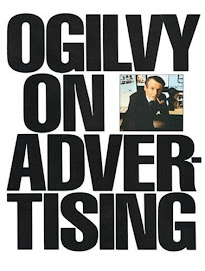
brain food #3 : ogilvy on advertising


Ogilvy On Advertising
By David Ogilvy


by Michael C. Gray
August 30, 1999


David Ogilvy’s life is inspirational. He was a college dropout, former chef and former door-to-door salesman who became a copywriter and founded the largest advertising agency in the world. So, when David Ogilvy writes about advertising, it is well worth studying what he has to say.


This book could well be titled, "What Works In Advertising."


David Ogilvy did not believe that advertising should be totally guesswork. His firm, Ogilvy and Mather, conducted extensive research on what really works, and then shared their findings with the world. It is amazing how the advertising industry has ignored this information. Ogilvy also believed that people who are interested in advertising as a career should become students of advertising. Advertising executives who refuse to study the principles of the profession are as foolish as a person who hangs a shingle to practice medicine without going to medical school and studying medical developments. On the other hand, he found the quality of coursework and textbooks on advertising at universities to be poor.


He believed people who enter the advertising profession should work in direct response advertising for at least a year to learn techniques that really work. Direct response advertising is the only type that produces measurable results.


Here are a few of the principles for print ads that Ogilvy shares in his book.


1. Layout. A reader’s eye tends to look first at an illustration, second at the headline, third at a caption under the illustration, fourth to the copy. Therefore, the layout should be illustration first, every illustration should have a caption, headline second, copy third.


2. Typestyle. Serif typestyles are the easiest to read (they are typically used in books for this reason.) Use serif typestyles for your ads. Words with all capital letters are also hard to read. The eye tends to read "all caps" one letter at a time. Use upper and lower case.


3. Reverse. White letters on a black or dark background is almost impossible to read. Use it sparingly. If a newspaper or magazine requires you to "flag" an advertisement, write "advertisement" at the top in reverse, using italics. It is impossible to read and therefore practically invisible.


4. Subheads. A subhead between the headline and body copy builds readership. For long copy, additional subheads throughout the copy helps retain interest.
Drop-initials. "If you start your body copy with a drop-initial, you increase readership by an average of 13 percent."


5. Number points. "If you have a lot of unrelated facts to recite, don’t use cumbersome connectives. Simply number them."


Space between paragraphs. Using a space between paragraphs increases readership by an average of 12 percent.


Sex in advertising. "Some copywriters, assuming that the reader will find the product as boring as they do, try to inveigle him into their ads with pictures of babies, beagles and bosoms. This is a mistake. A buyer of flexible pipe for offshore oil rigs is more interested in pipe than anything else in the world. So play it straight." The test for sex is relevance. "[T]here is a functional reason to show nudes in advertisements for beauty products."


Here are some interesting points for television ads.


1. Slice of life. Copywriters hate them. Consumers love them. Consumers should win!


2. Characters. A "character" used to sell your product over a number of years becomes the living symbol of the product. Titus Moody sold Pepperidge Farm bread for 26 years. Cora sold Maxwell House coffee for seven years.


3. News. Commercials which contain news have above average response. "Products, like human beings, attract most attention when they are first born. For an old product, you can create news by advertising a new way to use it."


4. Testimonials by celebrities. "These are below average in their ability to change brand preference. Viewers guess the celebrity has been bought, and they are right. … Viewers have a way of remembering the celebrity while forgetting the product."


5. Budget. "I have no research to prove it, but I suspect that there is a negative correlation between the money spent on producing commercials and their power to sell products. My partner Al Eicoff was asked by a client to remake a $15,000 commercial for $100,000. Sales went down."


"The consumer is not a moron. She is your wife."


David Ogilvy wrote this book with a charming, self-effacing style and a warm British sense of humor. There are many examples of advertisements in the book that you will need a magnifying glass to read. Ogilvy will be sorely missed in the advertising profession. He passed away at age 88 on July 21, 1999, leaving a rich legacy of books, including Ogilvy On Advertising, and advertisements for us to study.


If you are interested in learning how to produce better ads or how to spend your advertising dollars more effectively, you really should read this book.


Friday, June 27, 2008

brain food # 2 : the 22 immutable laws of branding


The 22 Immutable Laws of Branding
by: Al Ries & Laura Ries

1. The Law of Expansion: The power of a brand is inversely proportional to its scope. Trying to be all things to all people undermines the power of the brand. The strength of brands lies in becoming synony-mous with a single category. Brands that spread themselves across categories lose brand focus, identity, and ultimately market share.

2. The Law of Contraction: A brand becomes stronger when you narrow its focus. By narrowing the focus to a single category, a brand can achieve extraordinary success. Starbucks, Subway and Dominos Pizza became category killers when they narrowed their focus.

3. The Law of Publicity: The birth of a brand is achieved with publicity, not advertising. A new brand must be capable of generating favorable public-ity in the media or it won't have a chance in the marketplace. Anita Roddick built the Body Shop into a global brand with no advertising, but with massive amounts of publicity. On the other hand, Miller Brewing spent $50 million in advertising to launch a brand called Miller Regular. The brand generated no publicity and very little sales.

4. The Law of Advertising: Once born, a brand needs advertising to stay healthy. Sooner or later, a brand leader has to shift its branding strategy from publicity to advertising. By raising the price of admission, advertising makes it difficult for a competitor to carve out a substantial share of the market.

5. The Law of the Word: A brand should strive to own a word in the mind of the consumer. If you want to build a brand, you must focus your branding efforts on owning a word in the prospect's mind. A word that nobody else owns. Kleenex owns "tissue," Federal Express owns "overnight," Volvo owns "safety."

6. The Law of Credentials: The crucial ingredient in the success of any brand is its claim to authenticity. Coke is the real thing in the minds of many, even though the last "real thing" advertisement ran almost thirty years ago. A brand's credentials in a category as authentic, real, original, or the leader are very powerful indeed.

7. The Law of Quality: Quality is important, but brands are not built by quality alone. Does a Rolex keep better time than a Timex? Does Hertz have better service than Alamo? Does a Montblanc pen write better than a Cross? Are you sure? The perception of quality, more than quality itself, is what builds a brand. And the best way to build a quality perception in the mind of consumers is by following the laws of branding.

8. The Law of the Category: A leading brand should promote the category, not the brand. The most efficient, most productive, most useful aspect of branding is creating a new category. Customers don't really care about new brands, they care about new categories. What was the market for cheap cars before Volkswagen? What was the market for home pizza delivery before Dominos? What was the market for in-line skates before Rollerblade?

9. The Law of the Name: In the long run, a brand is nothing more than a name. In the short term, a brand needs a unique idea or concept to survive. But in the long term, all that is left is the difference between your brand name and the brand names of your competitors. Shorter names that are unique and memorable are far stronger than longer, vague or generic names.

10. The Law of Extensions: The easiest way to destroy a brand is to put its name on everything. More than 90% of all new product introductions in the U.S. are line extensions. Line extensions destroy brand value by weakening the brand. The effects can be felt in diminished market share of the core brand, a loss of brand identity, and a cannibalization of the one's own sales. Often, the brand extension directly attacks the strength of the core brand. Does Extra Strength Tylenol imply that regular Tylenol isn't strong enough?

11. The Law of Fellowship: In order to build the category, a brand should welcome other brands. Consumers want to have choices. Choice stimulates demand. Healthy competition helps to build the category. The competi-tion between Coke and Pepsi makes customers more cola conscious. Per capita consumption goes up.

12. The Law of the Generic: One of the fastest routes to failure is giving a brand a generic name. The problem with a generic brand name is its inability to differentiate the brand from the competition. At your local health food store, you'll find Nature's Resource, Nature's Answer, Nature's Bounty, Nature's Secret, Nature's Way, Nature's Best, Nature's Plus, etc. Will any of these generic brands break into the mind and become a major brand? Unlikely.

13. The Law of the Company: Brands are brands. Companies are companies. There is a difference. Customer's think of brands, not companies. Procter and Gamble isn't Tide. General Motors isn't Cadillac. The brand itself should be the focus of your attention. Use the company name, if necessary, in a decidedly secondary way.

14. The Law of Subbrands: What branding builds, subbranding can destroy. Subbranding erodes the power of the core brand. Waterford is the leading Irish crystal maker. Introducing "cheap" Waterford as "Marquis by Waterford" only dilutes the Waterford brand. Subbranding attacks a brand's place in he mind of the prospect.

15. The Law of Siblings: There is a time and place to launch a second brand. A second brand can be launched to focus on a new subcategory within the same product family. Toyota launched Lexus because the Toyota brand couldn't fill the luxury ar category. The focus is on the brand, not the company. Customers buy a Lexus not because it's made by Toyota, but in spite of it.

16. The Law of Shape: A brand's logotype should be designed to fit the eyes. Both eyes. A customer sees the world through two horizontal-ly mounted eyes peering out of the head. For maximum visual impact, a logotype should have a horizontal shape. The ideal shape is 2 1 /4 units wide by 1 unit high.

17. The Law of Color: A brand should use a color that is the opposite of its major competitor. Coke is red, and Pepsi is Blue. Hertz is yellow, and Avis is Red. Color consistency over the long term can help a brand burn its way into the mind.

18. The Law of Borders: There are no barriers to global branding. A brand should know no borders. The perfect solution to growth in a competitive market is not line extensions, but building a global brand. A brand should have a consistent message globally, but must take into account the perceptions of its country of origin.

19. The Law of Consistency: A brand is not built overnight.Success is measured in decades, not years.This is the law which is violated most frequently. Once a brand occupies a position in the mind, the manufacturer often thinks of reasons to change. Markets may change, but brands shouldn't. They may be bent slightly, or given a new slant, but their essential characteristics should never be changed. Long-term, consistent programs might be boring, but they are also immensely powerful.

20. The Law of Change: Brands can be changed, but only infrequently and only very carefully. Nothing is absolute and there are exceptions to every rule. There are three situations where changing your brand is feasible: When your brand is weak or non-existent in the mind, when you want to move your brand down the food chain to a lower price and perception point, or when your brand is in a slow-moving field and the change is going to take place over an extended period of time. Remember, changing your brand is a long and difficult process. Change at your own risk!

21. The Law of Mortality: No brand will live forever. Euthanasia is often thebest solution. While the laws of branding are immutable, brands themselves are not. They are born, grow up, mature, and eventually will die. Yet companies that are willing to spend millions to save a dying brand, won't spend pennies to launch a new one. Opportunities for new brands and threats to old ones are constantly being created by the invention of new categories. The rise of personal computers created opportunities for Compaq, Dell and Gateway, but put pressure on Digital, Data General and Wang.

22. The Law of Singularity: The most important aspect of a brand is its single-mindedness. What is a brand? A singular idea or concept that you own inside the mind of the prospect. It's as simple or as difficult as that.

Excerpted from "The 22 Immutable Laws of Branding"

Wednesday, June 25, 2008

brain food #1 : the 22 immutable laws of marketing

The 22 Immutable Laws Of Marketing
by: Jack Trout and Al Ries


Excerpts:


1. the law of leadership - it is better to be first than it is to be better: "The basic issue in marketing in creating a category (i.e. a given type of product or service) you can be first in. It's the law of leadership. It's better to be first than it is to be better. ItÕs much easier to get into the mind first than it is to try to convince someone you have a better product than the one that did get there first."

2. the law of the category - if you can't be first in a category, set up a new category you can be first in.


3. the law of the mind - it's better to be first in the mind than to be first in the marketplace: "Is something wrong with the law of leadership (previously presented)? No, but the law of the mind modifies it. It is better to be first in the prospect's mind than first into the marketplace....Being first in the mind is everything in marketing. Being first into the marketplace is important only to the extent that it allows you to get into the mind first."


4. the law of perception - marketing is not a battle of products, it's a battle of perceptions.


5. the law of focus - the most powerful concept in marketing is owning a word in the prospect's mind (i.e. the way that Coke 'owns' the word 'cola', or Xerox owns 'copier').


6. the law of exclusivity - two companies cannot own the same word in the prospect's mind.


7. the law of the ladder - the strategy to use depends on which rung you occupy on the ladder - each category has its own ladder or hierarchy, and where your product or service is in this hierarchy will determine your strategic options.


8. the law of duality - in the long run, every market becomes a two-horse race.


9. the law of the opposite - if you're shooting for second place, your strategy is determined by the market leader.


10. the law of division - over time, a category will divide and become two or more categories.


11. the law of perspective - marketing effects take place over an extended period of time.


12. the law of line extension - there's an irresistible pressure to extend the equity of the brand: "One day a company is tightly focused on a single produce that is highly profitable. The next day the same company is spread thin over many products and is losing money."


13. the law of sacrifice - you have to give up something in order to get something: "The law of sacrifice is the opposite of the law of line extension. If you want to be successful today, you should give something up. There are three things to sacrifice: product line, target market, and constant change."


14. the law of attributes - for every attribute, there is an opposite effective attribute: "Marketing is a battle of ideas. So if you are to succeed, you must have an idea or attribute of your own to focus your efforts around. Without one, you had better have a low price. A very low price."


15. the law of candor - when you admit a negative, the prospect will give you a positive: "...it may come as a surprise to you that one of the most effective ways to get into a prospect's mind is to first admit a negative and then twist it into a positive."


16. the law of singularity - in each situation, only one move will produce substantial results.


17. the law of unpredictability - unless you write your competitor's plans, you can't predict the future.


18. the law of success - success often leads to arrogance, and arrogance to failure.


19. the law of failure - failure is to be expected and accepted.


20. the law of hype - the situation is often the opposite of the way it appears in the press: "When things are going well, a company doesn't need the hype. When you need the hype, it usually means you're in trouble."


21. the law of acceleration - successful programs are not built on fads, they're built on trends.


22. the law of resources - without adequate funding, an idea won't get off the ground: "Marketing is a game fought in the mind of the prospect. You need money to get into a mind. And you need money to stay in the mind once you get there."