and the replies from the ladies in my twitter timeline was unkind and in disagreement with laura. your take?
today's AMAZING TV AD : honda's "cog" 2 minute tv spot
that's what happens when clients and advertising agencies decide to run ads not worthy to be called advertising. its dark, its huge and very irritating and unfortunately, everywhere!
all they are doing is wawam! what a waste of advertising money!
here is a first row view of Philippine Advertising and Philippine Marketing.
mount pinatubo erupts shooting ashes several kilometers high, then floating to blanket many other towns hundreds of kilometers away
new comments from WAWAM! readers
please note that comments are being posted here on a delayed basis, unfortunately, by a few hours from time of posting, so it seems. that is due to two things : (a) all comments are being moderated and (b) this program shows the comments on a delayed basis, not real time.
if you want to read the latest comments, go to the post itself and click "comments".
Saturday, February 16, 2013
valentine ads that will turn you red in the face, for better or worst
and the replies from the ladies in my twitter timeline was unkind and in disagreement with laura. your take?
Tuesday, February 28, 2012
applying mass consumer marketing & advertising to the intangible "family planning" product
while family planning can eventually take the form of real and tangible products like condoms or pills which has real brand names and packages that can be bought in retail and drug stores, what the effort intended to do was to get the target audience to buy in or believe in "family planning" and for the same target audience to decide to use any one of family planning methods available.
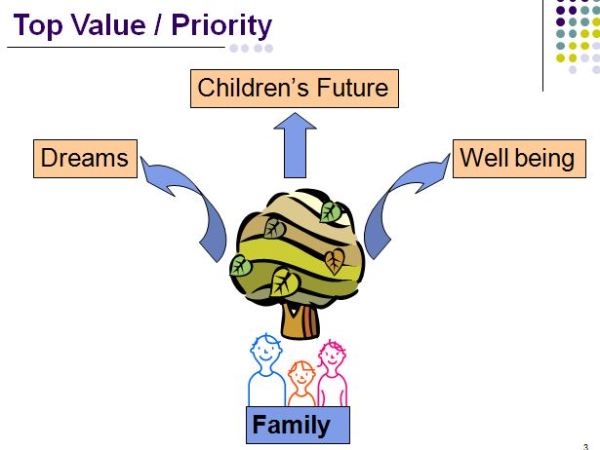
first to be conducted were a series of qualitative research, focus group discussions in metro manila, davao and cebu among several groups of women and men with varying age groups. and marital status. the qualitative research was done to gain possible consumer insights for the development of advertising that will promote family planning use, advocacy work and public relations efforts. equally important, the qualitative researches were conducted to serve as inputs for the design of the quantitative research that was going to be done nationwide.these charts are only a small portion of the whole research but it is quite telling on where the minds and hearts of pinoys, specially filipina women are in relation to family planning to themselves and their families.the first part of the FGDs (focus group discussions) was a discussion on values and dreams of the respondents for their families.an interesting methodology was designed. a drawing of a tree with roots, trunk and leaves were placed on the board. respondents were given post it pads where they were asked to write on them the values they believe in, those that are important for them or their dreams. they were asked to put the post its on the board, place it anywhere inside or outside the tree. once everyone has done this, their answers were processed and discussed with the moderator.where the respondents placed the post it in relation to the tree had meaning to them. post its placed outside the tree meant whatever was written there was not very important for them. those placed on the leaves were more important and down to the roots. to the respondents, those they placed on the roots were the most important for them."why pinoys who are single or married need family planning in their relationship", click here to read full article: http://bit.ly/ApfPVi
and it is this goal of having consumer information that is thick, robust and expansive that the design of the FGDs was made of.
going in we assumed that pregnancy is most probably one of the most important events for couples who are in a relationship. we knew that getting pregnant will involve very major changes in a person's life, if not for men, it is certainly so for women. we wanted to know what aspects of their lives will be affected by pregnancy.
it is this reason that the first topic discussed in the FGD was about the respondent's values or those that are important to them. we wanted to get some base data or information about the order of things in their lives as far as values and priorities were concerned.
in getting at these, the direction given was we wanted some projective technique to be used. we felt that direct questions will not do and that a projective technique (in this one, respondents were asked to stick their post its where they wrote their values on a drawing of a tree) will get us a lot more.
projective techniques make it easier for respondents to respond to the questions and the ensuing discussion. more importantly, the discussion afterwards in explaining what they wrote and why they placed the post it in that particular spot in the tree would be good start points for the moderator to probe the respondents.
the second question, "what will you think or feel if you find out you are pregnant today?" was meant not only to come as close as we can to mimicking real life situations that couples experience, it was also meant to shock and put the respondent out of kilter. we wanted to be controversial at this very early stage of the FGD. actually the way this was described was, we wanted to get "violent" reactions from the respondents.
the theory was getting controversial or eliciting violent reactions from the respondents is one of the best ways to get thick and robust responses from them. we were hoping we will push the respondents to extremes and corners that will enable them to think better and yes, say a lot more than the usual.
from these thick and robust responses, we will then collate them and form a cohesive and sensible whole from which we can draw the consumer insights that will be used for the advertising and other marketing efforts we were going to do for family planning.
the design worked very well.
you could actually feel the tension and excitement among the respondents after the second question was asked. all of them became very livid and attentive and resulted to them giving excellent answers to questions or opinions to issues brought about by the moderator or by their fellow respondents.
key here is tailor fitting the design of the research to the goals you want to get from the research. it is also important to understand the topic that you are researching. we knew pregnancy is a sensitive topic for many pinoys, specially women. talking about pregnancy will also need talking about sex and their sexual practices. these are topics that many filipinas do not usually want to talk about specially among strangers. being a sensitive topic demanded a design that overcomes this as a barrier.
more on this next....
Wednesday, January 6, 2010
mcdonald's "tweens" tv ad sizzles with tween consumer insight
this ad makes mcdonald's as the fast food chain for real people, making it look very much a part of pinoy life. they have been coming out with great ads very similar to this one. we applaud them and hope they will not stop coming up with ads like these.
one of the key barriers for patronage of mcdonald's in this market is it is less pinoy than jollibee. ads like this chips away on that barrier. in fact the recent ads of mcdonald's shows it is successfully shedding that barrier.
this ad is 5 stars!
Wednesday, March 11, 2009
mcdonald's "first love - huling el bimbo" tv spot works, gives mcdonald's a human heart and it is real
it has a very interesting story and what makes it even better is that it has a very good twist to it. it is supposed to be a sad story, but you don't feel bad after the ad ends. in some strange way and it can be hard to explain, you feel good after seeing the ad.
the ad gives mcdonald's a very human heart and a real one. it's not just a restaurant where people go to eat, it is a place where stories about the lives of people are made. romance in a fast food restaurant? it probably happens in real life but in our dreams and expectations, romance happens in a french restaurant. hard to imagine that you will hear violins played in a fastfood joint like mcdo but in this one it did and we all smile after.
and that is where one of the appeals if this ad springs from.
puppy love or your first love is always a good subject to talk about. "the one that got away" is one other story everyone has. but combining both the way that this mcdonald ad did makes magic.
the stroke of genius in this ad for the brand is making the mcdonald's desert of fries and ice cream sundae as the fulcrum, the star of the story. dipping the fries on the ice cream sundae was the spark of the beginning of the first love story and the same thing was the reminder that this girl of years ago is now the woman that got away. it is a good romance story when we see one that does not use the often used, touch of the hand, or smile or first kiss, this one is the action of dipping fries on the ice cream sundae.
there is a twin to that stroke of genius and it lies on the same element of dipping fries into the sundae. eating fries laced with ice cream sundae may seem gross to many, but those who practice it swear it is gourmet food at its best. it is a practice specially among the young and kids, it's just they have kept it a secret to the rest of us.
now, that strategy visual, that consumer habit, the best kept secret of gourmet food enjoyment in a fastfood chain is formally owned by mcdonald's. we are sure that after they aired this ad. many of the uncoverted tried it and most probably got converted. for sure a large portion of kids tried it.
that is what advertising is marketing is about - ads that make more people use more of the brand's products. now, more people will not just order only fries or just ice cream sundae, they need to order both.
putting it in this ad makes this ad resonate. people will empathize with it. they will find relevance and meaning. it is an excellent consumer insight. how the creative director strung that together is a stroke of genius. now, that's the third time i said that.
more on this ad on the next post.
Monday, January 5, 2009
must-read for any marketing professional who wants to succeed in the technology market
there in one answer to all the questions the author posted at the start of the article --- consumer insight and consumer preference! the nature of consumer insight/consumer preference to those unfamiliar with marketing would always sound like a mystery or at worst it does not make sense. but when you start to go to the consumer and extract insights, then everything will make sense. not only will it make sense, what was previously thought of to be complicated will now look pretty simple and plain. that is the power of the consumer insight.
the article actually proceeds to give excellent consumer insights that answer most of the questions posted. one wonders if the author is in marketing. it is very clear the author understands very well what consumer insights mean.
Memo to Vendors: Here's How to Build a Winner
Mike Elgan, Computerworld
Why do some people prefer Windows XP and Mac OS X over Windows Vista ? After all, Vista is pretty and sleek and much more advanced than XP, and, in many areas, Mac OS X. Why is there so much love for Xbox, but none for Windows Mobile ?
Why do BlackBerry users love their BlackBerrys, but the public is lukewarm about Palm devices?
Why is the Amazon Kindle, which is an unsophisticated, clunky, poorly designed gadget so popular with owners?
Why do people love plain, ugly Gmail?
The answer to these questions is a mystery to most of the companies that make PCs, gadgets, consumer electronics devices and to software makers. The industry spends billions on usability testing and user interface design. Unfortunately, that money is mostly wasted.The problem is that there are too many technologists in technology. The technology is only half the equation. The other half is the human, that irrational, impulsive, impatient, power-hungry gratification machine.
When you ask someone what they really want, they won't tell you the truth because they're not aware of the truth.
Both users and product designers alike talk about user interface (UI) consistency, usability and simplicity, and system attributes like performance and stability. What's missing is that these attributes are means to an end. The real issue is always the user's physiological feeling of being in control. And control comes in many ways:
Consistency: Designers focus on UI "consistency," but why? Consistency gives predictability, which gives users a feeling that they know what will happen when they do something -- even for the first time. It's a feeling of mastery, of control.
Usability: One of the errors software and hardware designers make is to base their UI decisions on the assumption that the user is an idiot who needs to be protected from himself. Give this moron too much rope and he'll hang himself, the reasoning goes. But instead of taking the Microsoft route -- burying and hiding controls and features, which protects newbies from their own mistakes but frustrates the hell out of experienced users -- it's better to offer a bullet-proof "undo." Give the user control, let them make their own mistakes, then undo the damage if they mess something up.
Simplicity: Simplicity is complex. And there are many ways to achieve it. One way is to insist on top-to-bottom, inside-and-outside simplicity. Extreme examples include the original Palm Pilot organizer, Gmail and RSS feeds. And then there's the illusion of simplicity, which is the Microsoft route. In trying to be the operating system vendor for all people and all tasks, Microsoft Windows and Windows Mobile are extraordinarily complex pieces of software engineering. To "simplify," the company hides features, buries controls and groups features into categories to create the appearance of fewer options, without actually reducing options. (From all accounts, it appears that Windows 7 will offer more of the same.) Both extremes result in something you could call "simplicity." But one version thrills users by putting them in control. The other frustrates them by taking away control.
Performance: Everyone hates slow PCs. It's not the waiting. It's the fact that the PC has wrenched control from the user during the time that the hourglass is displayed. That three seconds of staring at the hourglass is three seconds when you feel utterly powerless. Fast computers are good because they keep the user in control.
Stability: Designers focus on system "stability," but it's not because they worry about time wasted, though that's how users tend to talk a lack of stability. Like the performance issue, instability is about the theft of system control from the user. People waste all kinds of time on all kinds of things, and usually don't mind doing it. What enrages people is when somebody else forces wasted time on you. Blue Screens of Death are more akin to running into unexpected traffic jams or having somebody take away the TV remote control. You're forced into putting your objectives on hold, and left feeling powerless.
One reason for the industry-wide pandemic of frustrating products is that the whole culture of usability testing doesn't emphasize user feelings of control. Microsoft does usability tests, for example, but its tests are flawed. Typically, it sits random people in front of a PC in a usability lab. Victims are directed to do various tasks, and asked what they're doing and thinking as they try to complete those tasks. All of this is monitored, and everything is recorded.Microsoft usability testing tends to focus on enabling users to "accomplish goals." Microsoft categorizes these goals according to their educated preconceptions about what people are trying to do based on their jobs or user categorization are you a student, middle manager, designer, for instance. So Microsoft focuses on results.
My view is that how the user feels during the process is more important than anything else.Here's the problem. In these scenarios, users are using somebody else's PC. They expect and assume that the software is in control. There is no psychological feeling of "ownership" over the equipment or the software or the work or anything. So the most important element -- the sense of control people feel when doing their own work on their own PCs in their own homes -- is missing entirely from the tests.
During usability tests, users are asked constantly about the software. And that's the wrong question. When real people are doing real work, they're focused on their own desires and objectives and are frustrated or not frustrated based on the degree to which they're given what they want.
My advice to Microsoft is to add an additional test: a "Who's In Control?" test. After performing a task, ask the user to rank their experience on a scale with "me in control" on one side, and "software in control" on the other. Try all test methods for completing various tasks, and choose the one ranked with the maximum "me in control" score. And they need the home version for ongoing testing in the "real world."
We've all experienced the full range of emotions while using gadgets, PCs, phones and software. At one end of the spectrum is a kind of thrilling joy, where something "just works." At the other end, there is a consuming rage. The amount of time your emotional state spends at one end of the spectrum rather than the other is the one and only thing that determines how much you "love" the product.
All the factors involved in using a PC -- consistency, usability, simplicity, stability, performance and even the successful completion of tasks -- all come down to control.Give me control, and I will love your product. It's as simple as that.
Thursday, September 4, 2008
pantene's most beautiful wet beauties shine in gold
the commercial starts with supers that says "the most beautiful" and then we see 4 gorgeous, well yes beautiful women who seem to have just come off from a bronze tanning machine, everything about them - their skin and their clothes were in gold. the ambiance of the room they were in was also in a nice golden hue. (so they were probably still inside the bronze tanning room when they shot the commercial?)
and you do a double take, move closer to the screen when the first beautiful woman speaks. who is she? then the shock of your life, it's judy ann santos. she is beautiful! you quickly make a mental note : find out who the make up artist and director of photography responsible for turning judy ann to a beauty!
this commercial succeeds in convincing you they are beautiful women. never mind that at the opening shot, they had this fine print declaration that the title "beautiful women" came from Preview Magazine's April 2008 issue. watching the commercial (refer to mental note) persuades you to it.
then the tv ad shows the beautiful women talk about how their hair are strong even when wet. apparently hair when wet is at its weakest state. i didn't know that but i believe it, four beautiful women told me so. who can refuse?
it ends with the copy and supers that says "shine. pantene." shine? where did that come from?
and that is the part when some debate must have ensued on. pantene's long term brand equity is "shiny hair". but a huge 99.99% of this ad does not talk about shine. it didn't even show it. what it did was talk about strong hair. my guess is they probably rationalized that by saying the consumer insight is strong hair. ahhhh, well, hmmm..... we will let that go for now because we are still high from looking at those golden beauties.
and that brings us to the strategic question of - is this ad about beautiful women, golden ladies, strong hair or shiny hair?
as for me, hands down it's about beautiful women. after watching this commercial, there is this urgent need to find out the names of the director, the make up artists, the director of photography and the costume and set designer. if they can make judy ann santos look beautiful, i'm buying pantene and hiring them for my next commercial with women talents.
Saturday, August 23, 2008
australia's hahn beer tv ads - why men are from mars and women are from venus
while the bud light beer ads are all about how men try to get it on with women, the hahn beer ads seem to be all about how not to get it on with women.
the ads reinforce the stereotypes about men and i suppose in many ways the stereotypes on beer as well. it's hard to imagine something like a wine product being
able to pull off the stories in these ads. but it's easy to imagine how men can actually behave the way they do in the ads.i wonder if hahn beer consumption among men went up while beer consumption among women went down. the ad reminds women of what things they don't like about men and by extension, will it tell them why they should not buy or consume hahn beer? it's not a clearly polarizing commercial, but it does put across very clear and separate messages to males and females.
its an ad full of humor, will women find it humorous enough that they won't get turned off on hahn beer? beer is mostly a male product and it can make sense that the ad plays up to the males. or does it?
it presents hahn as the beer for the boorish, clueless and insensitive male. are there men who would like to be seen as that kind of male? or would that make men prevent them from being associated with hahn?
for this ad campaign to work, meaning generate sales and not hurt hahn's brand image, it assumes the target audience has a lot of humour and are very much open minded enough to take the whole thing as a tongue-in-cheek ad and result to hahn being seen as more endearing than a beer that you don't want to be associated with.
it's a high risk campaign.
what???
Tuesday, July 29, 2008
bacchus energy drink tv spot - a cocktail of brawn, brains and humor that works!
when it's an energy drink tv commercial, you know what to expect to see. the category name says it all. but not this tv spot for bacchus energy drink. there are a few things about it that are unexpected and they all work well together!
the positioning is the first unexpected twist for this energy drink. it went beyond brawn, it took in brains - "not just physical energy but also mental energy". it didn't make too much of a sale on it, but the story in the commercial gave it a good enough spin. energy is obviously a generic benefit to the category and being single minded on that makes bacchus just one of all the rest of the energy drinks. smart move number 1.
the target market of young professionals and in call centers is smart move number 2. the BPO industry is a large one and it's where you can find the largest number of young professionals. working the night shift is the thing you do when you work in call centers and that makes energy drinks a most appealing product. next to coffee, energy drinks are probably the second most consumed drink in the call center industry.
these young professionals will also find appeal in the mental aspect of the positioning. most of them are college graduates and will appreciate the ad's recognition that it also takes brains to do well in a call center job.
IT people however will probably laugh at the ad, as the supervisor's copy lines did not make sense. the lines mentioned unrelated topics and did not sound technical enough or mentally difficult enough. they should have consulted an IT professional to help them write those copy lines.
you get the humor and you appreciate it, smart move no. 3. the humor is there not just for relief but used to demonstrate key aspects of the positioning.
it also works very well because of the excellent casting, the main talent in the ad was a perfect choice - his looks were exactly what we expected. the acting was superb - real looking and not at all overly done. over-doing it is a great temptation in a storyboard like this. that means the director did an excellent job.
this bacchus tv spot is an energy boost - an excellent cocktail of brawn, brains and humor that works very well.
Tuesday, July 15, 2008
nike's manny pacquiao tv spot
everything works very well - the consumer insight is deep and hits home, the visuals and production values are excellent, copy is very sparse and the choice of the song and lyrics is brilliant.
this is a country hungry for heroes for the longest time and pacquiao serves that role very well with a string of not only successes but brilliance in his sport. it also helps that he looks and speaks like most of us - simple words, some english, with a strong accent from our hometown and he makes a lot of sense. he is not at all pretentious and it seems he does not yet know of his greatness. or if he did, he keeps forgetting about it.he doesn't know it yet or perhaps he does not care, but pacquiao is a class act. and that is why this nike commercial is the best of all pacquiao tv ads.
it's very respectful of manny's stature as a hero to the people. it does not put manny in awkward, silly and forced story lines and does not make manny say those silly copy lines. the nike ad simply puts the hero in exactly the place and situation he excels in and why we love him as our hero.
the choice of that line from the country's national anthem "...ang mamatay nang dahil sa yo" tugs at every one's hearts and very eloquently speaks of what our hero seem to go through in every fight and most importantly the suffering many people have to endure in the country. it connects with us very well. and that is exactly what a brilliant consumer insight is.
it's great to know that nike made a classy commercial for a classy hero. and a great reminder to all of us that filipinos are also a class act. kudos to nike!
Sunday, May 25, 2008
philippine demographics - OFWs, the now definition of the pinoy masa
from the American Idol discussion on the dynamics of demographics and psychographics, this article from mahar mangahas is an excellent follow through - the ofw demographics.
the ofw has become the modern day quintessential definition of the pinoy masa. it's no longer juan de la cruz riding or pulling a carabao or wearing a salakot, it is now "mahal" in a jacket, with his his hand carry bag, pasalubongs on both arms and pushing large balikbayan boxes on his way out of the departure area of the NAIA.
it's interesting that SWS has elevated the OFW into a substantive segment of pinoy society and i agree it's about time. but how much do we know about the OFW and his/her families? has any serious marketing or advertising research been done to understand this segment? and more importantly, while the OFW segment is pervasive, does it have enough uniqueness as a group and buying power for marketers and advertisers to develop specific marketing plans for?
mahar mangahas' article may be the beginning. without going into details, these are the aha! data and analysis that popped out:
- women power confirmed and strengthened! women now more than ever make major family decisions and on more matters. this to me is the most major finding from the data. there are many strategic changes one can do by using just this data.
- living standards have improved. but what standards or criteria are being used? and in what areas of life?
- the OFW families are more optimistic. does optimism bring with it a different set of psychographics and push buttons?
Measuring the OFW advantage
By Mahar MangahasPhilippine Daily Inquirer
First Posted 01:54:00 05/24/2008
MANILA, Philippines—Overseas Filipino workers (OFWs) have done so much to improve the quality of life of their families in the Philippines as to make these families a demographic group deserving of its own statistics. Such families are now being identified in the regular Social Weather Surveys, from the question: “Is there a family member in this household who is currently working abroad, or not?”
One out of six or seven families in the nation is an OFW family, which I will abbreviate as OF; a non-OFW family will be NOF. The OF-proportion was 14 percent in the First Quarter 2008 survey of the poll group Social Weather Stations; it has been as high as 17 percent in previous surveys. Out of the country’s 18 million families, more or less 2.5 million families have an OFW working abroad.
These 2.5 million OFs are spread out geographically, but with Metro Manila a bit over-represented and Mindanao a bit under-represented, relative to their populations. There are about 500,000 in Metro Manila, 1.1 million elsewhere in Luzon, 500,000 in the Visayas, and 400,000 in Mindanao.
Note that OFs refer to the families that the OFWs left behind in the Philippines, and not the OFWs themselves:
- Forty-two percent of OFs, compared with only 32 percent of NOFs, are headed by women—when husbands are away, their wives take over.
- Heads of OFs tend to be older: 42 percent of them, compared with only 29 percent of heads of NOFs, are at least 55 years old.
- Heads of OFs tend to be more educated: 22 percent of them, compared with only 12 percent of NOFs, have college degrees.
OFs are clearly better off than NOFs in terms of material possessions:
Security from poverty and hunger. More critical than material possessions, however, is security from economic deprivation.
Poverty among OFs is only half that of NOFs. Only 27 percent of OFs, compared with 54 percent of NOFs, rate their families as poor, or “mahirap.”
Poor OFs have a median threshold of P12,000 per month for home expenses to avoid being poor. Poor NOFs, however, have a median of only P6,000. Thus OFs also have much higher living standards than NOFs. (The median is the amount sufficient to satisfy half of the poor.)
On the other hand, 35 percent of OFs, compared with only 25 percent of NOFs, rate their families as not poor, or “hindi mahirap.” (The balances from 100 percent are those who see themselves on the borderline between poverty and non-poverty.)
The experience of hunger among OFs is less than half as frequent as among NOFs. Only 7.6 percent of OFs, versus 17.0 percent of NOFs, say that they experienced hunger at any time within the last three months, without having anything to eat, i.e., involuntarily.
Moderate hunger (experiencing it only once or a few times in the last three months) is 5.6 percent among OFs, compared to 13.6 percent among NOFs.
Severe hunger (suffering often or always in the last three months) is 2.0 percent among OFs, versus 3.4 percent among NOFs.
Trends in quality of life. A trend is a change over time, whereas a status is a position at one point in time. The SWS surveys measure past trend in quality of life (“uri ng pamumuhay”) of the family by asking the household heads if it has gotten better, gotten worse, or remained the same compared to 12 months ago. The surveys measure future trend by asking if they expect the quality of life of the family to get better, get worse, or remain the same in the next 12 months.
Relative to the past, 28 percent of OFs said they gained and 39 said they lost, for an unfavorable “gainers minus losers” score of -11. Among NOFs, however, only 17 percent said they gained, whereas 51 percent said they lost, for a dismal past trend score of -35.
Projecting into the future, 42 percent of OFs expect their quality of life to get better and 16 percent expect it to get worse, for a fairly good “optimists minus pessimists” score of +26. Among NOFs, only 27 percent are optimists, and 24 percent are pessimists, for a merely neutral future trend score of +3.
In viewing these figures, one should bear in mind that the advantages of the OFs were earned for them by their OFWs—“ang mga bayani ng bayan” [the heroes of the nation].
Satisfaction with President Gloria Macapagal-Arroyo. Incidentally, the advantages of OFs over NOFs do not translate into any difference between them in appraisal of national governance, as indicated by satisfaction with the performance of President Arroyo.
Among OFs, 25 percent said they are satisfied and 52 percent said they are dissatisfied with the performance of Ms Arroyo; that gives a net satisfaction rate of -27. Among NOFs, 28 percent are satisfied and 54 percent are dissatisfied, with her performance, for a net satisfaction of -26.
http://opinion.inquirer.net/inquireropinion/columns/view/20080517-137095/Update-on-poverty-and-hunger
......................................OFs.....NOFs
Has a phone.................73%.....51%
Mobile...........................60%.....48%
Landline........................25%.......9%
Has cable TV................20%......9%
Has a computer...........20%......6%
Has a motor vehicle....33%....22%
4 wheeled.....................14%......7%
2 or 3 wheeled.............21%....16%
---------
Thursday, May 15, 2008
consumer insight
What consumer insighting can give that benchmarking can’t
By Ned Roberto, Ardy Roberto
Philippine Daily InquirerFirst Posted 05:01:00 05/09/2008
Question: We heard the senior Marketing Rx-er once spoke about consumer insighting. We agree with him that underneath every successful marketing campaign, a good consumer insight was responsible. We also like his point that we shouldn’t limit ourselves to only one method or one source of insighting.
We’re in the crowded consumer processed food business. Our consumer insighting does not come directly from talking to consumers as you’ve suggested is better. It’s indirect. We’re into competitive benchmarking and competitor intelligence. In fact, we now refer to our Market and Consumer Research Department as Competitor Intelligence Department.
We appreciate the senior Marketing Rx-er’s emphasis on the many many consumer insighting research methods available both quantitative and qualitative. We actually tried two of them: One quanti and one quali. But they each just took too long and were both expensive. Benchmarking and competitive intelligence by contrast gave us consumer insights that were quick and relatively cheap and sometimes very cheap.
Please tell us: Is consumer insighting research really worth that much more? What can we get from it that we can’t get from our benchmarking and competitive intelligence?
Answer: We should start with where you are in consumer insighting. That’s with competitive benchmarking and competitor intelligence. You’ve already mentioned their two key advantages. So we won’t get into those. Instead, let’s take a closer look at their insighting capabilities.
In competitive benchmarking, you have the benefit of “best practice” in your search for a solution to a marketing problem. That best practice need not be and is usually not found in your own industry. Take the classic case of Toyota’s search for a better inventory control system that ended in its own “just-in-time” best practice. Toyota found that not in Ford where they started their benchmarking but in the vegetable section of US supermarkets.
You may ask: Does that qualify as a consumer insight? Not directly but indirectly, yes. After all, the search for just-in-time was provoked by Toyota’s felt need to serve the car market and car-buying motorists more efficiently than competition but at a larger profit.
Competitor intelligence is even less difficult to connect to consumer insighting. For example, what your innovating competitor is able to offer ahead of you came from its consumer insighting research. Your past experience with competition in your processed food industry must certainly confirm that.
So both benchmarking and competitor intelligence are ultimately consumer insighting-based or -inspired. But that doesn’t answer your question of what’s in consumer insighting research that’s not in benchmarking and competitor intelligence. Of course, that’s not the point of the foregoing explanation. We wanted to firmly establish in your mind that every effective insighting including your benchmarking and competitor intelligence approaches is ultimately consumer insight driven.
Now, on to your question—
Notice that benchmarking and competitor intelligence is about your current market and industry. And as you yourself said, it’s a market and industry that’s now crowded. In the coming years, it’s going to be more crowded. So what’s the prospect of business growth?
Insights from benchmarking and competitor insights will promise a usual single digit sales growth. When it’s double digit, it’s typically going to be in the neighborhood of between 10 and 20 percent, or if you pray hard enough, maybe between 20 and 30 percent. It won’t be a doubling or tripling of sales.
That will be the case unless the insight is about a “new uncontested market” segment. Such a new market segment can double sales because it’s another market. When its market size is about the same as your current market segment, it’s like duplicating in sales your current segment. When the new segment is about double the market size of your current segment, then it’s easy to see how the simple arithmetic will triple sales. It’s like duplicating twice over in sales your current market segment.
This sales-doubling or sales-tripling consumer insight comes from a consumer insighting research that’s been specifically designed for that purpose. In his consumer insighting seminar, the senior Marketing Rx-er refers to it as “the market-growing insighting research.” It’s not just sales-growing but market-growing. The impact is still on sales but in market-growing, that’s mega-sales-growing.
You may of course say, as many marketing colleagues of ours also say, that innovating competitors may be into such a market-growing insighting research. So the easier option is to do a Matsushita who just waits for Sony to come out with a market-growing new product. It then gets a prototype, reverse engineers it and then comes out with a much-improved imitation. That’s what they successfully did with the Betamax and came out with VHS as a superior Betamax.
But this is not an independent either-or option. You can resort to it as you can also at the same time get into the discipline of having your own consumer insighting research system. In setting up for your insighting research agenda, you also have the option of outsourcing the research, or else go for a D-I-Y (do-it-yourself) alternative. You said that you found research outsourcing too time consuming and expensive. So the more cost-effective and quicker alternative for you is a
D-I-Y research approach.
It’s unfortunate that marketers and marketing researchers refer to D-I-Y research as “quick-and-dirty” research. When incorrectly designed and nonscientifically implemented, it’s true that a D-I-Y research is quick and dirty. But when you bring statistical and marketing science into its design, implementation and analysis, you can turn a D-I-Y research into a decent “quick-but-clean” research. How to do this is, of course, another matter and suited for another column.
Sunday, April 27, 2008
clinton's tv ads

the idea of a phone ringing at 3am, specifically a parent needing to call someone at 3am, together with the shots of children fast sleep is a very powerful and suscint combination. there is no mistaking what the ad is telling you. every parent can relate to that situation and the urgency that the person answering your call at that hour better be competent and someone who can help you.
Tuesday, April 8, 2008
claudine, jodie and carmina tv30s - lactum tv spot the schizoid and repressed tv ad. part 1
this tv spot is some kind of a repressed tv ad where it seems it thinks it's a superior product that seem to want to position itself on a superiority claim but it doesn't, either intentionally or unintentionally. this indecision has resulted to an ad where it seems to shoot itself in the foot in more ways than one.
this indecision is also shown in using not only one, but three celebrity endorsers - claudine, jodie and carmina and yet they are not prominently featured in the ad where they appear only at the end, the last 2 to 3 seconds. it's not just the matter of not being able to make the most of the multi-million peso talent fees they had to pay the three endorsers, but more than that why have celebrity endorsers in the ad when they are not used properly? endorsers are chosen supposedly for their pulling power and the power to persuade but with the very limited time they are used in the ad and worse, the story in the ad don't even relate to their lives as celebrities, why use them at all? do they believe in the power of the endorsers they chose or not?
let's be honest here - will it really make a big difference, a loss in sale power if they removed the few seconds that the 3 endorsers appeared in the commercial in the last 2 to 3 seconds of the ad? will the audience miss anything in substance or sale?
99% of the ad feature ordinary upscale moms who make an effort to do their best for their kids - giving their kids not only the most but also giving extras on top of the most. these are moms who wake up early, who know that being a mom is difficult, cook the food and make sure their kids eat properly by serving them even fruits. and these moms choose lactum for that same reason because not only does lactum give their kids all the essential nutrients in the food chain, it has extras helping kids get 100% nourished. the visuals in the ad seem to be straightforward except that part where we see a mom putting a rubber ducky in a child's bath tub (very upscale! a bathroom with a bathtub!). i don't get what that meant or how that relates to moms wanting to give their kids the most plus more. was the ad saying i don't just give my kids a bath, but also playtime during bath time? why is that relevant? and why is that good?
the scenes they chose to depict the character of the moms as being very particular about choosing "the best and plus" are weak. they are not eloquent in communicating the characters of the mom. the power of the ad rests on the kind of moms that choose lactum but they have failed to make a compelling story to depict the characters of the moms they want to portray.
part of the problem could be length of time available to do so. it escapes me why they had to show three moms (i actually know the reason why, but more on that later) in the ad. having three moms prevented them to tell a more compelling and complete story on the moms. while time is obviously a factor, the biggest reason why this failed is the kind of copywriting they put into the ad. it appears to me that is the toughest challenge for the writers. the product freight is stock lactum - we have seen that in other lactum ads before. but the choices 0f waking up early, setting a toy in the bath and cooking food and serving meals with fruits are hohum depictions of what they want to convey. i don't think there's really enough time to allow the ideas to gel and properly communicated. all that they had was a sentence or two to be able to personify the lactum mom.
the only reason why i think they chose to have three moms in the ad is that they have 3 celebrity endorsers! hahahaha! (yup, that' real funny as it's really a very contrived reason.) it's probably a lame attempt to communicate 3 moms, 3 stories and 3 endorsers. but are we to believe that each of the three celebrity endorsers are represented in those three very lame scenes?
i get the feeling that choosing the right depictions of the lactum mom were the biggest battle the creative team had on this storyboard and ev eventually with the client. i bet they spent so much time with multiple revisions to get those 3 right. but in the end, they really were just bad writing. i get the feeling that a copywriter who just graduated from college 3 months ago wrote those scenes. or as they were revising the storyboard a hundredth time, the ad agency gave up in desperation and just agreed to whatever the client wanted to put in the ad.
this is a pity as giving flesh to the lactum mom is the foundation and core idea of this ad. it's probably the consumer insight that they extracted from some research but it's delivery is all lost on bad copywriting and too little time to do anything meaningful with it.
to be continued......